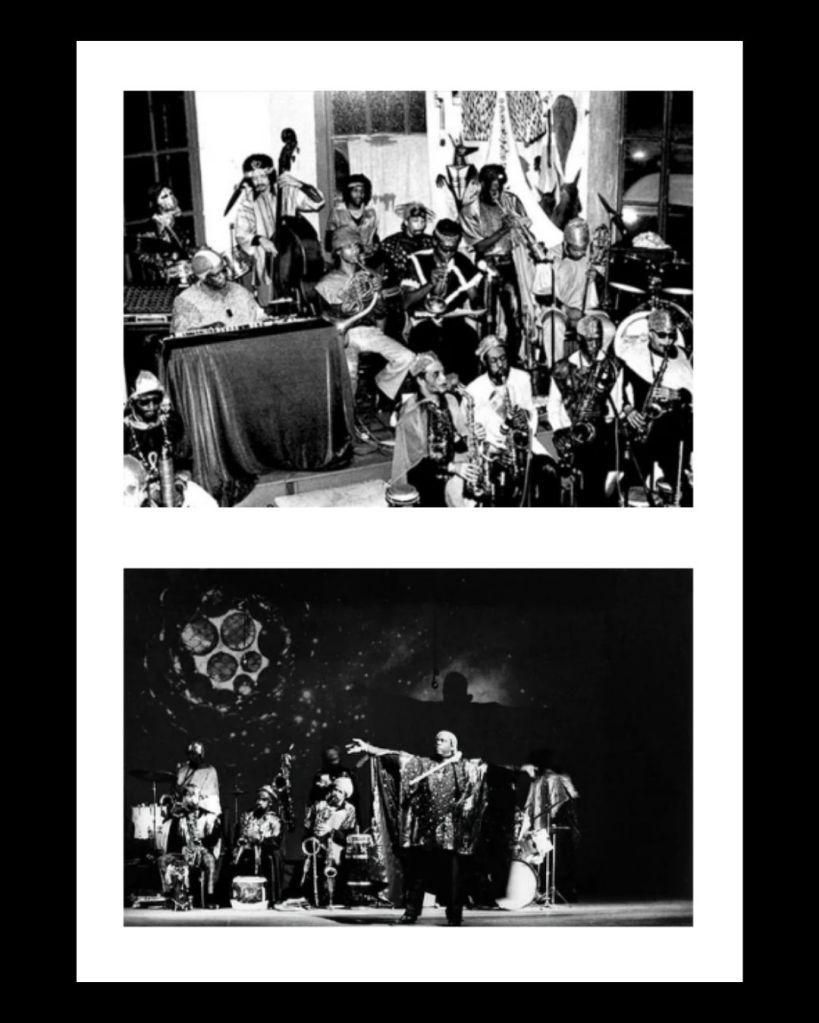
| “Al margen de conjeturas sobre su estado mental y su imaginario mundo que él mismo fomentó a crear, lo cierto es que pocos especialistas musicales y críticos de jazz dudan que Sun Ra fue uno de los grandes directores de orquestas de la segunda mitad del siglo XX y precursor, como ningún otro músico, en la introducción de los teclados electrónicos en la música de jazz” (apoloybaco.com 2014) | “Regardless of conjectures about his mental state and the imaginary world he himself fostered, the truth is that few music specialists and jazz critics doubt that Sun Ra was one of the great bandleaders of the second half of the 20th century and a pioneer, like no other musician, in the introduction of electronic keyboards into jazz music” (apoloybaco.com 2014). |
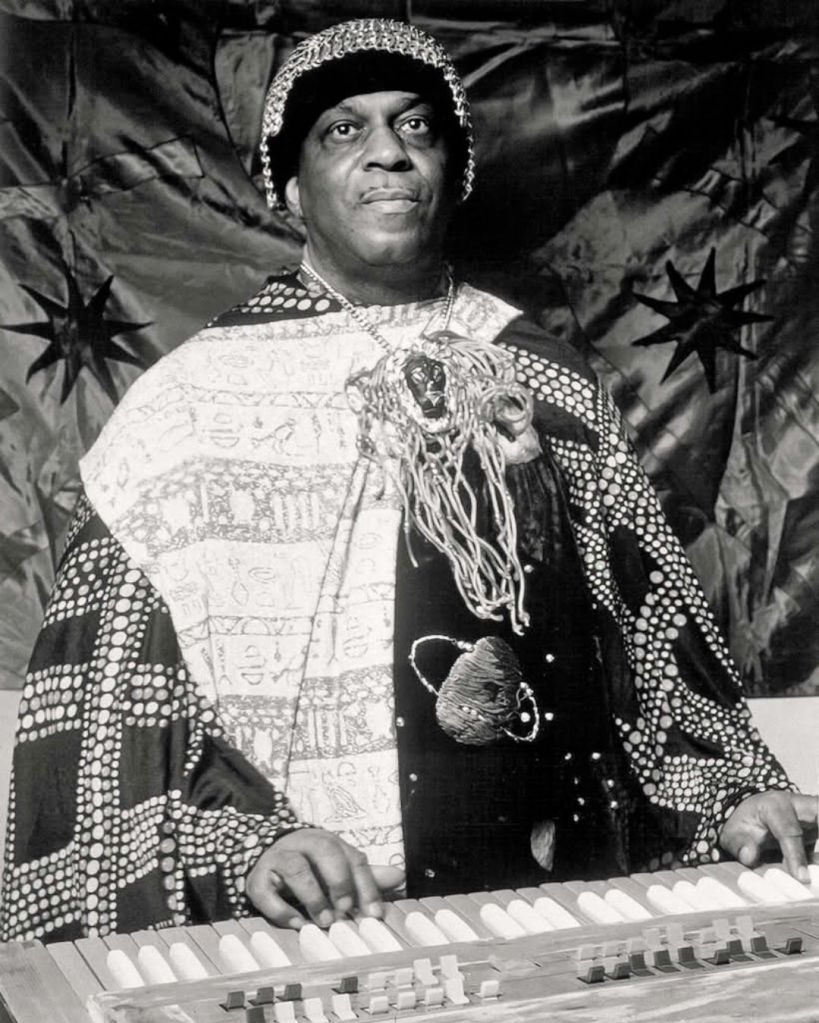
| Este mes en Living Room Lecturas, escucharemos al músico, poeta, líder de banda, y “arquitecto” de futuros y universos alternativos que se llamaba Sun Ra. “Puede que la historia haya atormentado a Sun Ra, pero tomó el control de su relato,” escribió Camille Norment en 2012. El lenguaje en el que Sun Ra dictó su historia fue la música. Mientras que algunos lo llamaban jazz avant-garde, Ra lo llamaba “música espacial.” | This month in Living Room Lecturas, we will listen to the musician, poet, bandleader, and “architect” of futures and alternative universes named Sun Ra. “History may have haunted Sun Ra, but he grabbed control of his story,” wrote Camille Norment in 2012. The language in which Sun Ra dictated his story was music. While some called it avant-garde jazz, Ra called it “space music.” |
| El afrofuturismo desplaza el enfoque del pasado traumático de los afroamericanos hacia el futuro, con todo su potencial para empoderamiento mediante la creación–“por negros para negros”–de narrativas alternativas. Sun Ra encarnó el afrofuturismo y lo vinculó al jazz para siempre. | Afrofuturism shifts the focus from the traumatic past of African Americans to the future, with its potential for empowerment through the creation—”by Black people for Black people”—of alternative narratives. Sun Ra embodied Afrofuturism and forever linked it to jazz. |
| Ra escribió su propia historia de origen, diseñó una subcultura, vivió en metáforas, y asertó, públicamente y en repetidas ocasiones, que los negros de los Estados Unidos debían inventar su propio futuro. Ra insistió que su música venía del futuro, y que abriría el camino hacia allí nuevamente. Ese futuro en que confiaba era cósmico, inclusivo, utópico, e independiente/libre del pasado. | Ra wrote his own origin story, engineered a subculture, lived in metaphors, and asserted, publicly and repeatedly, that Black people in the United States must invent their own future. Ra insisted that his music came from the future, and that it would pave the way back there again. The future in which he believed was cosmic, inclusive, utopian, and independent/free of the past. |
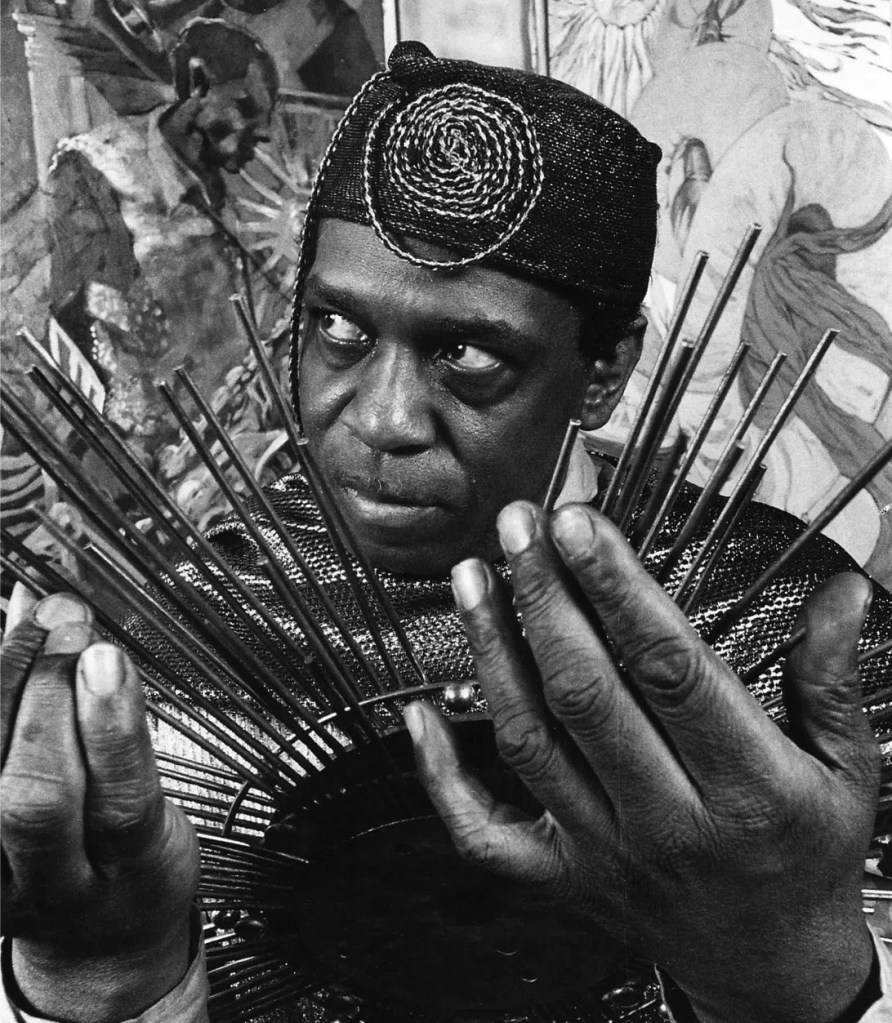
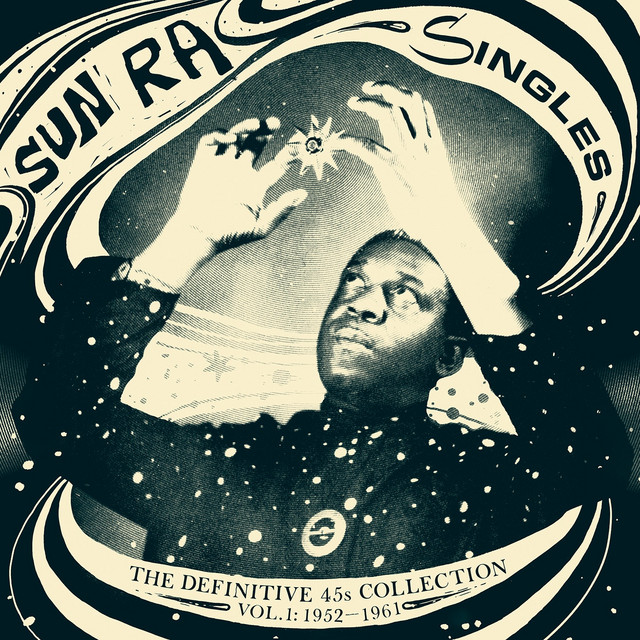
| “Si no eres un mito, ¿de quién eres la realidad? Si no eres una realidad, ¿de quién eres el mito?…” Sun Ra 1970 *enlace al álbum | “If you are not a myth, whose reality are you? If you are not a reality, whose myth are you?…” Sun Ra 1970 *link to album |
*Note, copied and pasted from Instagram:
One of many things on this planet right now of which I am especially proud. Third session of Living Room Lecturas happens Wednesday, February 25, in our living room and the topic is:
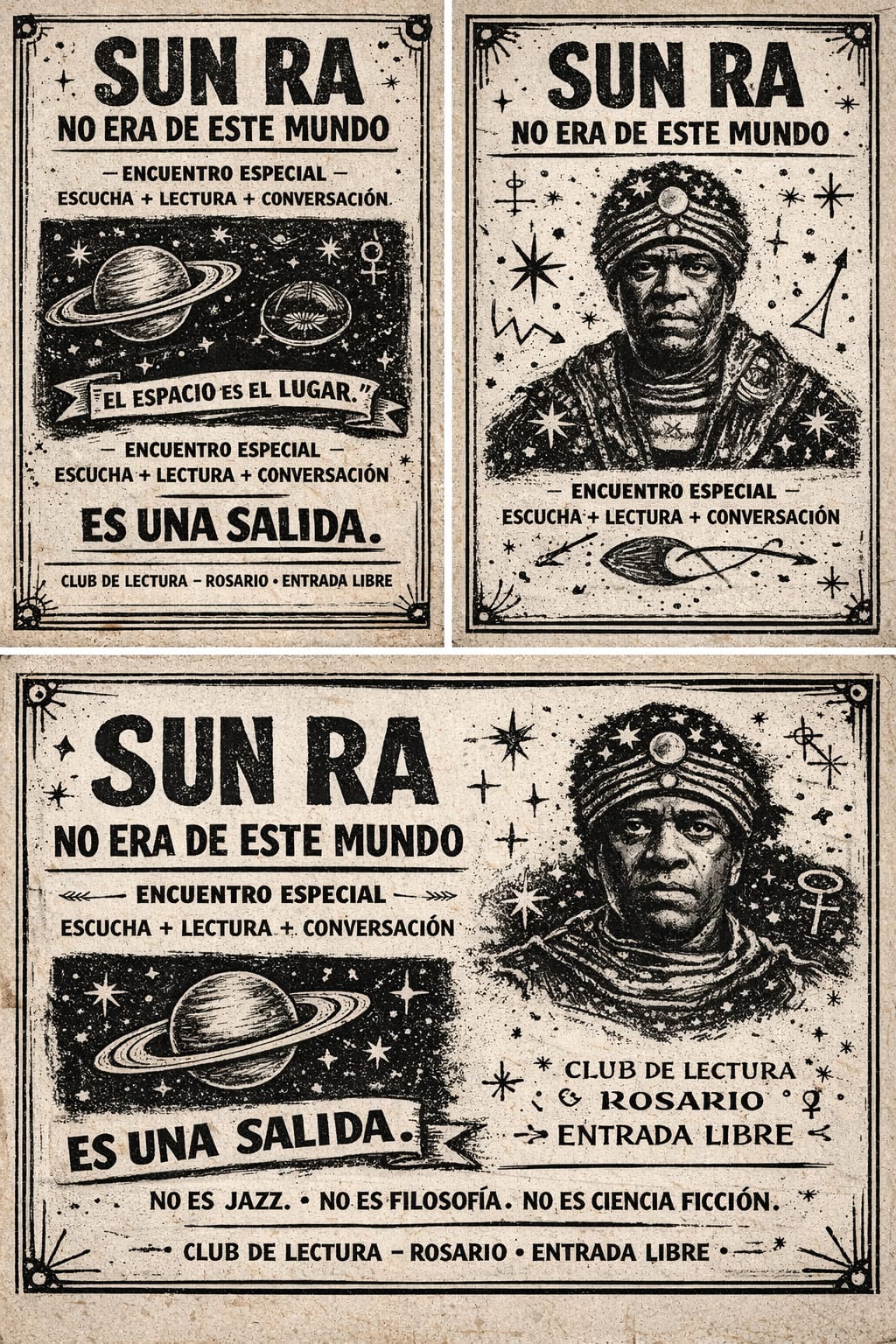
Afrofuturism | Sun Ra, Jazz, and Space Travel
The event is free but space–ours, unlike Ra’s–is limited, so RSVP early, please. Once confirmed, we will remind you to bring with you to the event:
1. food or drink to share, and
2. an open and inquisitive mind
All levels of expertise/inexpertise welcome. Interest in trying to think across time, from Ra’s to our own, encouraged.
Xx, D, @club_de_jazz_rosario, y @nicoyseru
 Monument City
Leave a comment